
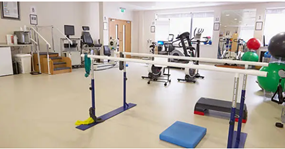
Returning to sport after an injury involves more than waiting for pain to disappear. Athletes also need adequate strength, power, balance and movement control to handle the demands of training and competition. VALD performance testing provides physiotherapists with objective measurements to identify weaknesses, track rehabilitation progress, and support return-to-sport decisions. In Adelaide, this technology is increasingly relevant for everyone from recreational runners and gym-goers to competitive athletes. Instead of relying solely on how an athlete feels or how a movement looks, testing can provide measurable information to help guide the next stage of rehabilitation.
What Is VALD Performance Testing?
VALD is a performance technology platform used across sports performance and rehabilitation settings. Its systems can measure different aspects of physical capacity, including force production, strength, power, balance and asymmetry.
One of the best-known systems is ForceDecks, a dual force-plate system designed to assess movements such as jumps, squats, balance tasks and isometric tests. The technology captures force data that can help a physiotherapist understand how an athlete produces and absorbs force.
For Adelaide athletes, this can add another layer of information to a conventional clinical assessment.
How ForceDecks Testing Supports Physio Care
ForceDecks testing can be particularly useful when an athlete needs to demonstrate that they have regained the physical qualities required for their sport.
Depending on the injury and goals, a physiotherapist may use tests involving:
● Countermovement jumps
● Single-leg hops
● Isometric strength
● Squat assessments
● Balance and stability
● Force and left-to-right asymmetry
These tests can help identify differences that may not be obvious during a standard visual assessment. VALD also reports that ForceDecks can assess more than 20 different movements across jumping, functional, balance and isometric categories.
Importantly, technology does not replace clinical reasoning. The results need to be interpreted alongside the athlete’s injury history, symptoms, movement quality, training demands and rehabilitation goals.
Objective Strength Assessment Physio in SA
Finding an objective strength assessment physio in SA can be valuable when physical rehabilitation requires measurable milestones rather than general strength improvements.
For example, an athlete recovering from a lower-limb injury may need to rebuild force production and control on the affected side. Repeated testing can help compare results over time and determine whether rehabilitation is progressing in the right direction.
Research published in the Journal of Science and Medicine in Sport compared ForceDecks with laboratory force plates across strength, balance, and movement assessments. The study found less than a 1% difference across more than 200 metrics tested, although reliability varied by metric.
This supports the value of objective measurement while also highlighting why experienced interpretation remains important.
Return to Sport Testing: From Rehab to Competition
Return-to-sport testing should reflect the demands an athlete will face after returning to training and competition.
A comprehensive assessment may combine VALD measurements with clinical strength testing, mobility assessments, movement analysis and sport-specific drills. For a footballer, that might mean progressing towards demands in acceleration, deceleration, jumping, and change of direction. A runner may require different testing priorities.
The goal is not simply to produce a score. Instead, VALD performance testing can help establish measurable benchmarks and identify areas that still require attention before progressing rehabilitation.
Why Adelaide Athletes Can Benefit
Adelaide has a broad sporting community, from local club competitions and community running groups to high-performance programs. Athletes at every level can benefit from understanding whether their physical capacity matches the demands of their chosen activity.
Data-driven testing can help you:
● Establish baseline performance measures
● Identify strength or force asymmetries
● Monitor rehabilitation progress
● Set objective training targets
● Support more informed return-to-sport decisions
Take the Guesswork Out of Your Return
VALD performance testing is most effective when it forms part of a broader physiotherapy and rehabilitation strategy. Objective data can provide useful evidence, but a qualified clinician must consider the complete picture before making return-to-sport recommendations.
If you are recovering from an injury or want a clearer understanding of your physical performance, speak with an Adelaide physiotherapist experienced in VALD testing. A tailored assessment can turn performance data into practical rehabilitation and training goals.
—
FAQs
1. What is VALD performance testing?
VALD performance testing uses specialised technology to measure aspects of physical performance such as force, strength, power, balance and asymmetry.
2. What does ForceDecks testing measure?
ForceDecks can measure force-related metrics during activities such as jumps, squats, balance tasks, and isometric tests.
3. Is VALD testing useful after an injury?
Yes. It can provide objective information that helps clinicians monitor rehabilitation progress and assess physical capacity alongside traditional clinical measures.
4. Who should consider return to sport testing?
Athletes recovering from injuries, particularly those returning to demanding sports, may benefit from structured testing before progressing to full competition.
5. Does VALD testing replace a physiotherapy assessment?
No. VALD technology provides measurements, but a physiotherapist must interpret those results alongside symptoms, injury history, movement quality and sport-specific requirements.