
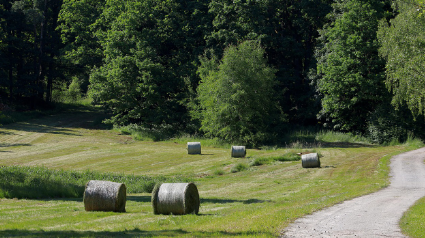
Across Australian hay and silage operations, efficiency and bale quality directly affect feed value, storage losses, and transport costs. One increasingly adopted solution is net replacement film for baling, a hybrid wrapping technology that replaces traditional net wrap while improving sealing performance and bale integrity. This net replacement film system is gaining traction in regions like New South Wales, Victoria, and Western Australia, where variable weather, high UV exposure, and large-scale harvesting demand consistent bale protection and faster wrapping cycles.
Understanding when to use it, how it influences bale formation, and what mistakes to avoid can help farmers maximise both productivity and feed preservation quality.
When to Use Net Replacement Film in Baling Operations
Timing and crop conditions are critical when deciding whether to use a film-based wrapping system. In Australian farming systems, net replacement film for baling is most effective in silage production and high-moisture hay where oxygen exclusion is essential.
This system is particularly useful when:
● Harvest windows are tight due to unpredictable weather patterns (common in coastal Queensland and southern regions)
● Producing silage for long-term storage in bunker or wrapped bale systems
● Handling leafy crops such as lucerne or clover that are prone to spoilage
● Reducing feed loss in high-value livestock operations such as dairy and feedlots
Unlike traditional net wrap, net replacement film for baling provides a tighter seal, reducing oxygen infiltration immediately after ejection from the baler. This is especially valuable during hot Australian summers, where fermentation risks increase rapidly.
Farmers also find it useful when operating high-capacity balers, as it reduces downtime associated with reloading or adjusting wrapping tension. However, correct machine calibration is essential to ensure consistent application across varying crop densities.
How Net Replacement Film Improves Bale Shape and Density
One of the key advantages of switching to film-based wrapping systems is the improved bale geometry they enable. Consistent shape is not just aesthetic—it directly impacts stacking stability, transport efficiency, and spoilage reduction.
With net replacement film for baling, the pressure distribution around the bale is more uniform than with traditional netting. This reduces “soft shoulders” or uneven edges that can occur when crop density varies across the chamber. The film conforms more tightly to the bale surface, helping maintain a compact cylindrical form.
In Australian transport conditions—where bales are often stacked on trailers for long rural hauls—this improved shape reduces movement and friction damage. It also supports more efficient storage in paddock stacks or shed environments, where stability is essential during seasonal weather changes.
Another benefit is improved moisture containment. Because the film provides a more continuous barrier, internal fermentation becomes more predictable. This leads to better feed quality retention, particularly in silage operations where aerobic spoilage can significantly reduce nutritional value.
Farmers often report that switching to net replacement film for baling also reduces edge fraying and outer-layer feed waste, resulting in less material being discarded when feeding out livestock.
Troubleshooting and Common Mistakes to Avoid
Despite its advantages, incorrect use of film wrapping systems can reduce performance and increase operating costs. The most common issue is incorrect tension calibration. If the film is too loose, bale edges become exposed, increasing oxygen ingress. If too tight, it can distort the bale shape or cause film tearing during ejection.
Another frequent mistake is ignoring crop condition variability. Wet or overly mature crops behave differently under compression. In these cases, net replacement film for baling must be adjusted for wrap overlap and stretch tolerance to prevent uneven sealing.
Machine compatibility is another critical factor. Not all balers are factory-optimised for film systems, and retrofitted setups may require upgraded rollers or tension arms. Failing to check compatibility can lead to inconsistent wrapping patterns and increased maintenance costs.
Storage and handling errors also impact performance. Film should be stored away from direct sunlight and extreme heat—conditions that are common in rural Australia—because UV degradation reduces elasticity and strength before use.
Finally, operators sometimes underestimate maintenance requirements. Regular cleaning of applicator rollers and checking for adhesive buildup ensures smooth film deployment. Neglecting this can cause slippage, uneven wrapping, or premature breakage.
Proper use of net replacement film for baling involves not just installation but ongoing system monitoring throughout the season. Small adjustments in tension, feed rate, and bale density can significantly improve outcomes.
Conclusion
Net replacement film technology is reshaping modern baling practices across Australian agriculture by improving bale protection, shape consistency, and feed preservation. When applied correctly, it reduces spoilage risk and improves transport efficiency, particularly in high-demand silage operations. However, success depends on proper machine setup, crop-specific adjustments, and disciplined maintenance routines. For farmers seeking higher-quality feed outcomes and improved operational efficiency, adopting this system strategically can deliver measurable long-term benefits.